
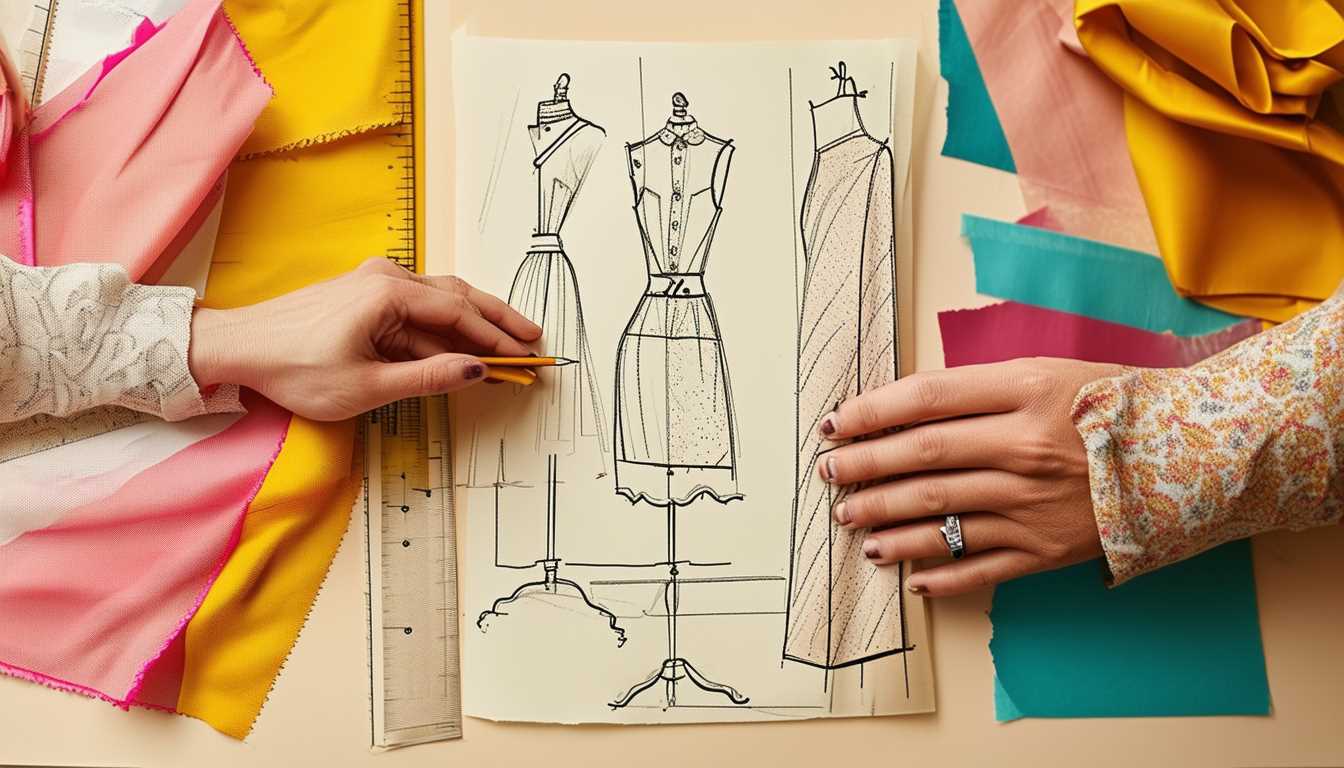
From Flat to Fierce: A Visual Journey of Transforming a Basic Pattern into a Runway-Ready Garment
Let’s be honest—there’s something wildly romantic about pattern making. At first glance, it’s all rulers, paper, and geometry. But beneath the technical façade lies something more artistic, almost alchemical. A flat blueprint—two-dimensional and unassuming—morphs into a sculpted piece of wearable art. The magic? It lives in the transformation. And today, we’re taking you behind the curtain on a visual journey that shows exactly how that happens.
Chapter One: The Humble Beginning – The Basic Block
Every great garment starts with what we call a “block”—think of it as the skeleton of your design. It’s not glamorous. In fact, it’s kind of the oatmeal of the fashion world: essential, but bland. But don’t let that fool you.
I still remember my first pattern draft—a basic bodice block on brittle brown paper, all harsh corners and lifeless curves. My instructor said, “This is your clay.” At the time, I didn’t get it. Now? I live by it.
Chapter Two: Plot Twist – Slashing, Spreading, and Sculpting
Fast forward to the moment that basic pattern meets your imagination. You’ve got ideas—maybe it’s a dramatic asymmetric neckline or a voluminous lantern sleeve that dances with every movement. This is where the magic of pattern manipulation takes center stage.
Let’s say we start with a basic A-line dress. Clean. Safe. Boring. But then we decide to slash the pattern across the bust, add a twist detail at the waist, and flare the hem into a fishtail. Suddenly, you’ve got something worthy of a red carpet, not a sewing lab.
Using the slash-and-spread method—a classic in pattern making—we slice along a dart and open it to create volume. Then maybe we rotate that dart into the shoulder and shape it into a soft pleat. In a matter of steps, you’ve gone from minimalist to avant-garde.
📌 Tip: When adding volume or drape, always test your muslin. Paper can’t simulate gravity—but fabric sure can.
Chapter Three: Fit for the Real World – Adapting Style to Body Types
Now here’s where artistry meets responsibility. Because no matter how jaw-dropping your design is, it’s nothing if it doesn’t fit the wearer beautifully. And no, one-size-fits-all is not a thing. Not in real fashion.
Let’s break it down with three body types we often design for:
1. Curvy/Hip-Forward:
For clients with fuller hips, pattern making is all about balance and flow. A-line silhouettes work wonders, but they’re even better when adjusted with added dart shaping at the waist and just the right flare at the hem. Also—don’t forget to contour the side seams gently to avoid tenting. We’re not here to hide curves; we’re here to honor them.
💡 Adjustment Tip: Create princess seams rather than darts—easier to tweak for a custom fit and offer more elegance.
2. Petite Frames:
Petites often drown in volume, so it’s important to reduce excess length and rethink proportions. With pattern making, even half an inch in the torso can make or break the look. Use vertical design lines, avoid bulky sleeves, and keep embellishments from overwhelming the garment.
💡 Adjustment Tip: Raise the waistline slightly and keep hem lengths just above or below the knee—never mid-calf. It visually elongates.
3. Athletic/Rectangular:
For straighter figures, you can create the illusion of curves with clever pattern work. Think peplums, gathered busts, or panels that contour and define the waistline. Even subtle shaping at the hips in the pattern can add that hourglass feel without padding.
💡 Adjustment Tip: Play with diagonal design lines to break up the visual boxiness and introduce dimension.
Chapter Four: Fabric Talks—and It Talks Loudly
Let’s not forget: the pattern is the framework, but the fabric is the voice. Ever tried using heavy twill for a soft draped blouse? Disaster. This is where your pattern making skill shifts from technical to intuitive.
I once drafted a sculptural sleeve that looked divine on paper. I chose a silk charmeuse—bad call. That sleeve collapsed like a soufflé. But when I re-cut it in crisp organza? Perfection.
📌 Pro Tip: Always drape in muslin first, but then test in your actual fabric—or something close. Patterns behave differently depending on how the fabric moves, creases, and responds to heat.
Chapter Five: From Paper to Power Pose
The final transformation is always electric. You started with a flat block. You imagined. You sliced. You tested. You refined. And then, in a whirl of pins and steam, your garment lives. It walks. It tells a story.
That basic pattern? It’s still there, quietly doing its job beneath the flair and fabric. But now it’s something else entirely. It’s a second skin. It’s expression. It’s confidence.
Final Thoughts: Mastering the Pattern, Honoring the Body
Pattern making isn’t just technical. It’s personal. It’s creative. It’s radical in its ability to include, adapt, and celebrate every shape that walks into your studio.
So next time you’re tracing a block, don’t yawn. Think of it as the first frame of your fashion film. What story will you tell? What body will you honor? What transformation will you create?
And whatever you do—never underestimate the power of a well-placed dart.